
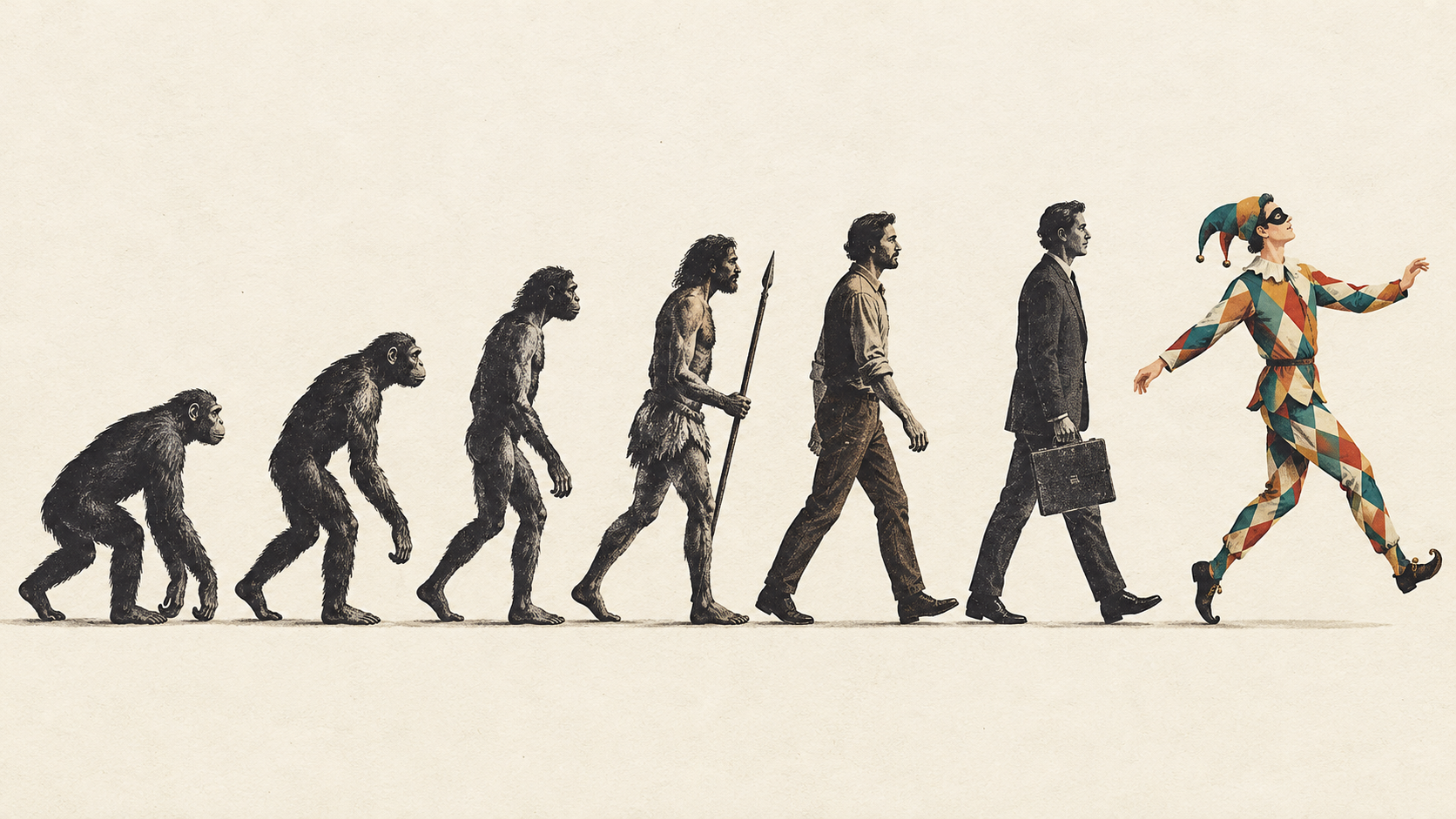
Monkey Business in School and life: The Case for Homo Ludens
Last night I watched Tag, the 2018 comedy about a group of men who have been playing the same game of tag since they were children.
It is a ridiculous film in many ways, but it is actually based on a true story. A group of friends from Spokane in the USA really did continue playing tag for decades, arranging their lives around an annual game in which the person who was “it” had to find one of the others. The story was reported in The Wall Street Journal in 2013 and subsequently became the basis for the film.
At one point, the film gives us the explanation: “We grow old because we stop playing.”
One of the characters continually attributes the quotation to Benjamin Franklin. He didn't say it points out one of the buddies towards the end of the film. The idea in reality is much older, though. The German psychologist Karl Groos wrote in 1896 that animals do not play because they are young; rather, they have a period of youth in order to play. The familiar “grow old” version seems to have developed from this idea later.
Young children generally don't need to be taught how to play. Give them some space, a few objects and some other children and they will usually work something out. They make things up, invent rules, take on roles, negotiate, experiment, fall out, start again and discover what happens when they try something different. Just like animals we need space to play in order to develop healthily, or ‘flourish’ as positive psychology calls it.
In Kindergarten, much of this is still recognised as learning. Then school becomes more serious. Learning becomes increasingly organised, measured and assessed. Play moves towards the edges. It becomes something that happens at break time, after school or when the “real” work has been completed. Just look at a mixed middle and high school playground. The older kids have a tendency to lounge rather than play.
That is rather odd when you consider what actually happens when people play. Johan Huizinga called us Homo Ludens - the human being who plays. For Huizinga, play was not simply a form of entertainment. It was deeply connected to human culture. We do still play as adults but it is often masked or done vicariously in the form of stand-up comedy or sport, theatre or watching others take risks and make fools of themselves. We seem to enjoy play, provided we can find a respectable reason for it, or someone else is doing it on our behalf.
There are various possibilities worth exploring. The Pedagogy of Play work at Harvard Project Zero offers one starting point. Augusto Boal’s Theatre of the Oppressed offers another, using games and improvisation to challenge habitual ways of thinking and responding. The improvisation principle of “Yes, and...” is a simple example: accept what someone else offers and build on it rather than shutting it down. This last one just featured in the most recent series of Ted Lasso.
Then there are the familiar classroom games - Call My Bluff, charades, Pictionary, role-play, quizzes and guessing games - as well as the outdoor challenges and cooperative activities associated with Erlebnispädagogik. These are rather different approaches, but each offers ways of making room for play, experimentation and the unexpected in learning.
Teachers are often under pressure to justify games as a means of getting content or skills across. A game must serve a learning objective, develop a skill or produce some identifiable outcome. But a game can simply be a game and still be justifiable. In fact, I would argue that more and more we need to teach the older students how to play again.
There is plenty of research into the psychological effects of play. It can be enjoyable, bring people together, relieve stress and create opportunities to experiment and think differently. Barbara Fredrickson's broaden-and-build theory, for example, links joy with the urge to play and interest with the urge to explore. These experiences can help build personal and social resources over time.
When we play, we try something. It doesn’t work, so we try something else. We negotiate. We take a risk. We laugh. We start again. This is one of the things that gets lost as children move through school. We become increasingly good at separating learning from playing, work from enjoyment, and achievement from experience. But we separate these things at a cost.
The men in Tag, in contrast, have carried a children’s game into adult life. They make time for it and protect it, despite jobs, marriages, families and all the other things that tend to take over as we get older. At the end of the film, there are shaky, handheld clips of the real men playing the game. In one, a shuffling old woman with a walker suddenly transforms into the attacker and sprints to tag his friend. The delight and laughter with which his victim acknowledges being caught are wonderful to see.
Homo Ludens. The happy human being who plays.
Research
Harvard Project Zero, Pedagogy of Play
Barbara Fredrickson, The Role of Positive Emotions in Positive Psychology: The Broaden-and-Build Theory of Positive Emotions
Johan Huizinga, Homo Ludens
Karl Groos, The Play of Animals
Augusto Boal, Games for Actors and Non-Actors
#HomoLudens #PedagogyOfPlay #PlayfulLearning #PositivePsychology #ExperientialLearning #LearningThroughPlay #Education #Wellbeing #Play