
We’ve Taught Kids to Feel Safe. Now It’s Time to Teach Them to Be Capable
It is easy to think of wellbeing as feeling good. If we are happy, satisfied, comfortable and free from anxiety, then surely we are doing well.
But there is another side to wellbeing which is less obvious.
We also need to feel that we have some input in our lives; that we can make choices, take action and influence what happens to us. As humans, we need to feel that we are capable — and we’re willing to pay a price for it. This is true for adults, but it is also true for children and young people. In fact, developing this sense of agency may be one of the important things that education has to offer.
Stephen Taylor, of the Wayfinder Learning Lab, offers a useful definition:
“Learner agency is the capacity to set goals, exercise judgement, regulate your own learning, think critically and creatively, and act with purpose. It is relational rather than solitary, it develops over time rather than arriving fully formed, and it is sustained by hope.”
The value of difficulty
Schools have become increasingly cautious about challenging students.
We are more aware of anxiety and mental health. We want to make sure that students feel safe and supported. We have become more conscious of the consequences of failure and of the different starting points from which young people approach school.
All of these are good things. However, in trying to protect students from difficulty, we can sometimes inadvertently deprive them of something they need: the experience of doing something difficult.
It might be learning to sit still, performing in front of an audience, reading a challenging text, solving a problem without being shown how to, or simply persevering with something that initially seemed beyond them.
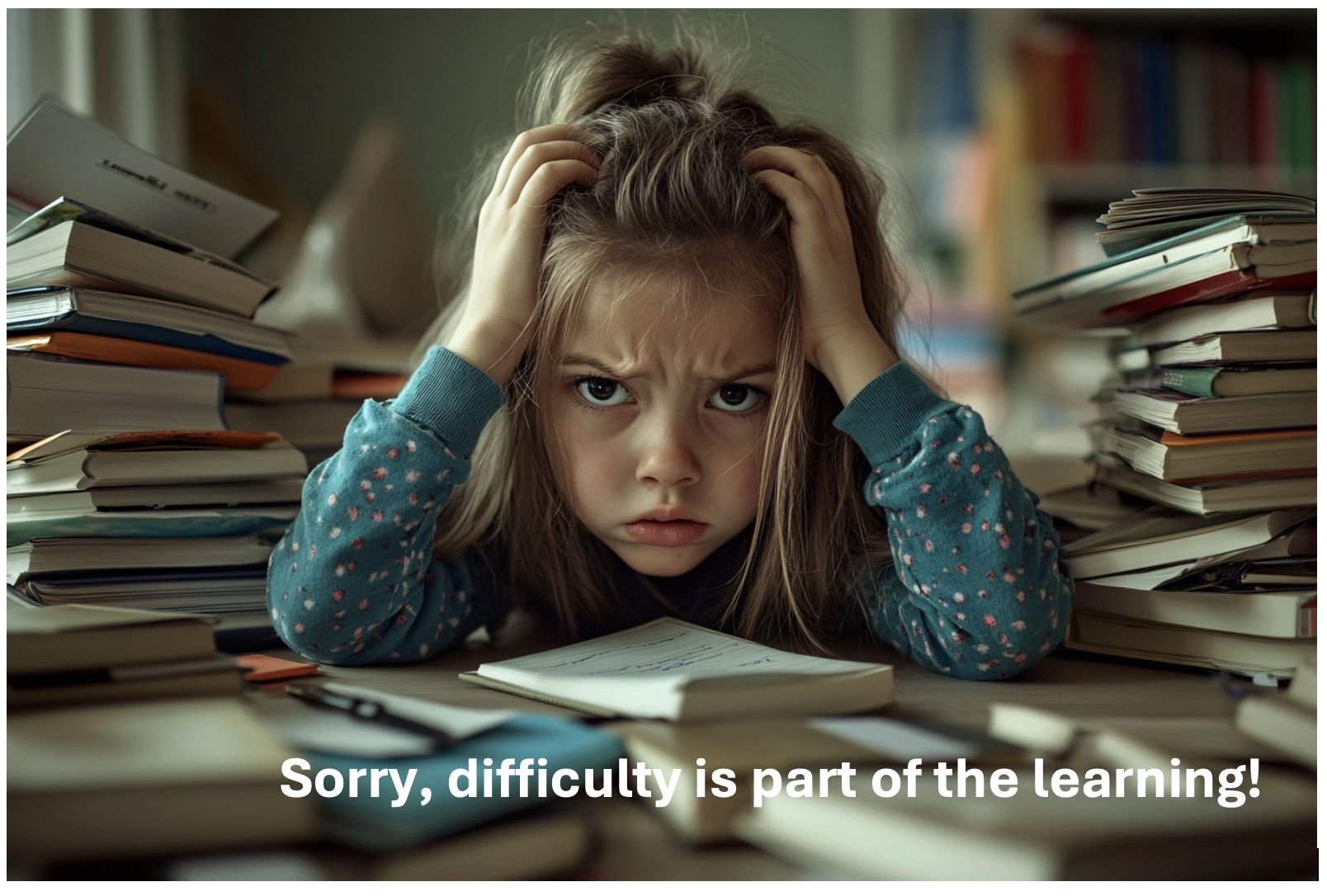
The difficulty is part of the learning. And if somebody removes the difficulty, they also remove the experience of overcoming it.
Freedom, risk and responsibility
Jonathan Haidt makes a related argument in The Anxious Generation. One of the ideas that stayed with me was his concern that, in our attempts to protect young people, we can sometimes give them too few opportunities to experience independence, responsibility, manageable risk and the ordinary difficulties of growing up.
The issue is not exposing children to danger. It is allowing them to encounter enough challenge to discover that they can deal with it.
Manageable risk can be empowering for children. It provides an opportunity to make a decision, experience uncertainty and succeed through using their own resources.
Or not.
Well handled - by both adults and students - getting something wrong or failing despite our best efforts can be enormously valuable. It helps young people learn early that getting something wrong is not catastrophic. And school is one of the safest places to learn that lesson.
Freedom, mastery and wellbeing
Interestingly, the link between autonomy, challenge and wellbeing also appears in recent research into open-water swimming.
A 2025 study examined 1,200 outdoor swimming experiences across 19 countries, comparing open-water swimming with swimming in outdoor pools. Both were associated with positive wellbeing. However, open-water swimming was associated with higher positive wellbeing, with feelings of autonomy and competence helping to explain the difference. (ScienceDirect)
Why might that be?
Swimming in a pool is generally more predictable. The temperature is controlled, the boundaries are clear and there are relatively few surprises. Open water is different. You have to make decisions. You have to respond to the environment. You have to judge your own capabilities. There is uncertainty.
And that combination of freedom, competence and manageable uncertainty seems to matter. This fits with the much broader body of research around Self-Determination Theory, which identifies autonomy, competence and relatedness as fundamental psychological needs.
Do we sometimes make things too easy?
There is an important difference between supporting a student through difficulty and removing the difficulty altogether. The first can build agency. The second can undermine it.
So, while we “meet the students where they are”, we should resist the temptation to then drag them by the hand along the corridor of learning.
When a student says, “I can’t do this,” our role as teachers is to offer encouragement - perhaps reminding them: “You can’t do this, yet.” And then resist the temptation to do it for them.
Our aim should not always be to make the educational experience comfortable. Schools should provide opportunities for students to choose, take responsibility, struggle, perhaps fail, and then ultimately succeed at something they could not previously do.
Because lasting wellbeing does not come from the comforting words: “You can do it.”
It comes from the internal realisation born of experience:
“I can do difficult things.”
Research: Groeneveld et al. (2025), The psychological benefits of open-water (wild) swimming: Exploring a self-determination approach using a 19-country sample, Journal of Environmental Psychology, 102, 102558; Jonathan Haidt, The Anxious Generation: How the Great Rewiring of Childhood Is Causing an Epidemic of Mental Illness (2024); and Stephen Taylor, Wayfinder Learning Lab, on learner agency. Wayfinder Learning Lab, on learner agency. (ScienceDirect)
#PositiveEducation #StudentWellbeing #LearnerAgency #Education #ExperientialLearning #Resilience #SelfDetermination #Wellbeing #MeaningfulLearning #RiskTakers